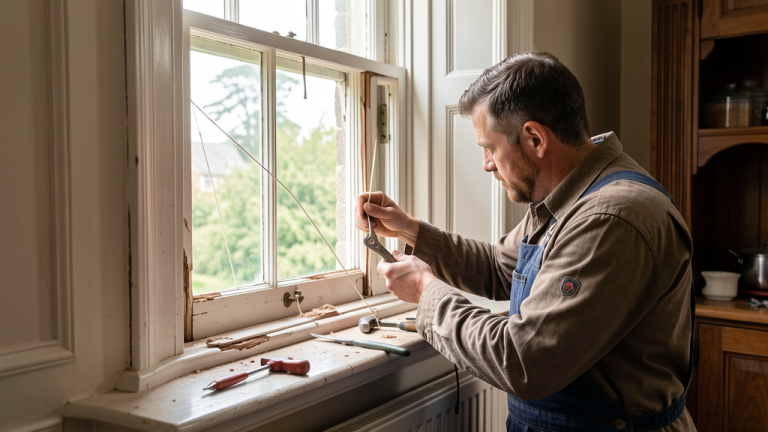
Sash Window Maintenance Guide Edinburgh
Why Sash Window Maintenance Matters in Edinburgh
Regular maintenance is the single most important factor in extending the life of sash windows. Edinburgh’s climate, with its high rainfall, frequent temperature swings, and coastal moisture, places particular stress on timber sash windows. A well-maintained sash window can last 100 years or more, while a neglected one may need expensive restoration or replacement within 20 years.
For Edinburgh homeowners in New Town, Stockbridge, Morningside, or any of the city’s conservation areas, regular maintenance protects both the fabric of the property and its value. The investment of a few hours per year can save thousands of pounds in restoration costs.
Annual Inspection Checklist
Carry out a thorough inspection of your sash windows in spring, after the worst of winter weather has passed. Check the following:
Paint finish: Look for blistering, peeling, or cracking paint, particularly on the bottom rails and sills where moisture exposure is highest. Exposed timber will quickly deteriorate in Edinburgh’s damp climate.
Sash cords: Open the window and inspect the cords where they pass over the pulley wheels at the top of the frame. Look for frayed strands, discoloration, or signs of wear. A cord with more than 50% fraying should be replaced.
Putty condition: Check the putty around each pane of glass for cracks, gaps, or sections that have fallen away. Deteriorated putty allows moisture to penetrate the rebate, leading to glass loosening and timber rot.
Window operation: Open and close each sash fully. It should move smoothly without sticking, binding, or needing excessive force. Note any areas where the sash sticks or rattles.
Draughts: On a windy day, hold a lit incense stick or feather near the window edges to detect airflow. Mark any areas where draughts are noticeable.
Seasonal Maintenance Tasks
Spring maintenance after winter: Clean the sash channels thoroughly to remove accumulated dirt and debris. Lubricate the pulley wheels with silicone spray. Inspect and replace any weatherstripping that has deteriorated. Touch up paint on any areas where it has been damaged.
Summer maintenance: This is the best time for paintwork. Warm, dry conditions allow paint to cure properly. Carry out any timber repairs that were identified in the spring inspection. Re-putty any loose panes.
Autumn preparation for winter: Check that all windows close and lock securely. Replace any weatherstripping that is worn. Ensure that drainage channels at the bottom of the frame are clear. Check that window sills are sound and sealed.
Winter monitoring: During severe weather, check for condensation between the panes or on the interior surface, which indicates seal failure. Wipe condensation promptly to prevent timber damage. Check that locks and catches are functioning correctly.
Painting and Finishing
Sash windows should be repainted every five to seven years, or sooner if the paint is showing signs of failure. The paint finish is the primary protection against moisture ingress, and ignoring it is the most common cause of timber rot in Edinburgh sash windows.
Before repainting, strip any loose or flaking paint and sand the surface smooth. Apply a primer to any bare timber, followed by two undercoats and two top coats. Use microporous paint that allows moisture vapour to escape from the timber while preventing liquid water ingress.
The most vulnerable areas are the bottom rail of the lower sash, the meeting rails, and the sill. These areas may need additional coats and more frequent attention. Never paint sash cords or pulley wheels, as this will impede their operation.
Common Problems and Early Intervention
Sticking sashes are often caused by paint build-up in the channels. A build-up of just 1mm of paint can cause significant friction. The solution is to strip the paint from the channel surfaces and apply a thin coat of furniture wax or silicone lubricant.
Rattling sashes indicate that the parting bead or staff bead has worked loose, or that the weatherstripping has worn. Tightening or replacing the beads and installing new weatherstripping will eliminate the rattle and reduce draughts.
Condensation between panes indicates that the putty or glazing seal has failed. The affected pane should be re-puttied or the sealed unit replaced promptly to prevent moisture reaching the timber.
When to Call a Professional
While many maintenance tasks can be carried out by homeowners, some issues require professional attention. Rotten timber, broken sash cords, seized pulley wheels, and windows that will not stay open are best handled by a specialist. Attempting DIY repairs on these issues can cause further damage and increase the cost of professional restoration.
A professional sash window survey every five years is a wise investment. The surveyor will identify developing problems that may not be visible to an untrained eye and provide a prioritised schedule of required maintenance and repairs.
If you discover damage during your maintenance inspection, broken sash window repair Edinburgh specialists provides guidance on common issues and when professional intervention is needed.
For expert assistance, explore conservation area sash window regulations in Edinburgh.