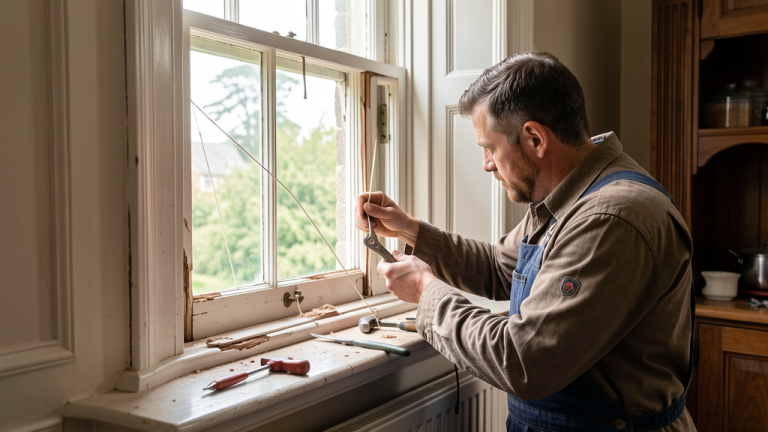
Sash Window Restoration Process Edinburgh
Initial Assessment and Quotation
Sash window restoration in Edinburgh begins with a thorough assessment of each window’s condition. A specialist will inspect the timber for rot and damage, check the operation of the sashes, examine the glazing and putty, and assess the condition of the cords, pulleys, and weights. This detailed survey identifies all necessary repairs and forms the basis of an accurate quotation.
For properties in Edinburgh’s New Town and other conservation areas, the assessment also considers any heritage requirements. Original features such as crown glass, historic ironmongery, and specific paint finishes may need to be preserved, which influences the restoration approach and cost.
A comprehensive quotation will itemise each stage of the work, including timber repairs, glazing, cord replacement, painting, and any specialist conservation work. Homeowners should expect a detailed breakdown rather than a single lump sum, as this allows for informed decision-making about which elements are priorities. If you suspect specific issues such as broken sash cords or stuck sashes, mention these during the survey so the quotation addresses them directly.
Removing and Stripping the Sashes
The restoration process begins with the careful removal of the sashes from the frame. The staff beads are prised off, the lower sash is lifted out, and then the parting beads and upper sash are removed. Each sash is taken to a workshop where the old paint is stripped using a combination of heat guns, scrapers, and chemical removers.
Heat stripping is preferred for historic windows as it minimises damage to the timber and avoids the environmental concerns of chemical paint strippers. The goal is to remove all layers of accumulated paint down to the bare wood, revealing the original timber condition underneath. In Edinburgh properties, sashes may have been painted a dozen or more times over 150 years, making this a labour-intensive process.
Once stripped, the timber is inspected for rot, insect damage, and previous repairs. Areas of decay are marked for cutting out and splicing with new timber. Where sash cord replacement is needed, this is the stage at which the old cords are removed and the weight pockets inspected.
Timber Repair and Splicing
Timber repair is the most skilled part of sash window restoration. Sections of rotten or damaged timber are cut out using precise joinery techniques, and new matching timber is spliced in using epoxy resins and mechanical fixings. The repairs are shaped and sanded to match the original profiles exactly.
Common areas requiring repair include the bottom rail of the lower sash, where water pooling causes rot, the meeting rails where condensation accumulates, and the bottom corners of the stiles. The splice joints are designed to be invisible after painting, with the grain orientation and timber species matched as closely as possible.
For Edinburgh’s period properties, the replacement timber is typically European redwood or oak, matching the original species used by Victorian joiners. Using the correct timber is essential for the longevity of the repair, as the replacement wood must expand and contract at the same rate as the original. For advanced timber damage beyond simple splicing, see our guide on when to repair versus replace.
Glazing and Putty Work
Original sash windows were glazed using linseed oil putty, which hardens over time and forms a weathertight seal. During restoration, the old putty is removed and any cracked or damaged panes are replaced. New putty is applied using traditional techniques, with the putty bedded and back-puttied to create a secure, waterproof seal.
Where original crown glass survives, it is carefully preserved and reused. Crown glass has a distinctive character and historical value that cannot be replicated by modern float glass. For replacement panes in conservation areas, specialists use thin float glass that matches the original profile.
The putty is left to cure for several weeks before painting. During this time, it develops the characteristic hard surface that has protected sash window glazing for centuries. For tenement properties, the logistics of glazing work across shared stairwells and upper floors add complexity — our tenement sash window repair guide covers these specific challenges.
Pulley and Hardware Overhaul
During restoration, every pulley is removed, cleaned, inspected, and lubricated or replaced. Cast iron pulleys in New Town properties often require careful derusting and reaming of the axle hole to restore free rotation. Worn pulleys that cannot be saved are replaced with matching cast iron or steel units that maintain the period character of the window.
Locks, catches, and stay bars are also inspected and refurbished. Original brass ironmongery is cleaned and polished rather than replaced wherever possible. For detailed guidance on pulley-specific issues, particularly in Georgian properties, see our pulley repair guide for Edinburgh’s New Town.
Rehanging and Balancing
Once the sashes are painted and cured, they are refitted into the frame with new sash cords, pulleys, and weights. The window is adjusted to ensure smooth operation, with both sashes moving freely and staying in position at any height. The staff beads and parting beads are refitted using new pins, and any gaps are filled and painted.
The rehanging process is where the quality of the restoration becomes apparent. A well-restored sash window operates silently, with no binding or sticking, and closes firmly against the frame without rattling.
The correct sash cord replacement is critical at this stage — using braided polyester cord with a 200kg breaking strain ensures 50–80 years of trouble-free operation. Chain is used for heavier sashes, while traditional hemp is reserved for heritage restorations requiring period accuracy.
Final Adjustments and Testing
The final stage involves a comprehensive test of each restored window. The specialist checks that both sashes open and close fully, that the locking mechanisms engage correctly, that the window is weathertight, and that the appearance is consistent with the original window style. Any minor adjustments are made on site, and the homeowner is shown how to operate and maintain the restored windows.
Restoration Timeline: From Survey to Completion
| Stage | Duration | On-Site or Workshop | Key Activities |
|---|---|---|---|
| Initial survey and quotation | 1–2 hours | On-site | Condition assessment, timber probing, cord/pulley checks, quotation preparation |
| Sash removal | 1–2 days (whole property) | On-site | Remove sashes, label each window, secure frames with temporary covers |
| Paint stripping and timber inspection | 1–2 weeks | Workshop | Heat strip all paint layers, assess timber condition, mark repairs |
| Timber repair and splicing | 1–2 weeks | Workshop | Cut out rot, splice new timber, shape to match original profiles |
| Glazing and putty | 2–3 weeks | Workshop | Replace broken panes, re-putty all glazing, allow putty to cure |
| Priming, undercoating, painting | 1–2 weeks | Workshop | Preserver, primer, 2 undercoats, 2 top coats — each sanded between coats |
| Installation and rehanging | 2–4 days | On-site | Fit new cords/pulleys/weights, rehang sashes, adjust operation |
| Final testing and sign-off | 1 day | On-site | Test all windows, demonstrate operation, provide maintenance guidance |
Total duration: Typically 4–6 weeks for a standard property. The workshop phases account for most of this time. On-site work (removal + installation + testing) is usually completed within a week. Scheduling work in spring or early summer allows optimal conditions for putty curing and paint drying — particularly important given Edinburgh’s damp climate.
Restoration Costs: Full Breakdown
| Scope of Work | Cost per Window | Cost for 10 Windows | Cost for 16 Windows |
|---|---|---|---|
| Basic restoration (re-cord, re-glaze, paint) | £400–£500 | £4,000–£5,000 | £6,400–£8,000 |
| Standard restoration (including timber splicing) | £500–£650 | £5,000–£6,500 | £8,000–£10,400 |
| Full restoration (extensive splicing, draught-proofing, all hardware) | £650–£800 | £6,500–£8,000 | £10,400–£12,800 |
These costs compare very favourably with like-for-like timber replacement (£1,500–£3,000 per window). For detailed cost analysis covering individual repairs, see our sash window repair costs guide.
Restoration vs Replacement: Which Is Right for You?
Restoration is nearly always the better option for period properties where the existing frames are structurally sound. Restored sash windows retain their original character, perform better thermally when combined with draught proofing, and can last for another century with proper maintenance. Replacement windows, even high-quality timber replicas, do not match the quality of original joinery.
However, if the frames are extensively rotted (more than 60% timber damage), or if the property has already had multiple poorly executed repairs, replacement may be the more practical option. A professional survey will provide clear guidance on which approach is best for your specific windows.
For a full decision framework covering the six factors — timber condition, conservation status, cost comparison, energy performance, property value impact, and ownership plans — see our comprehensive repair vs replacement guide.
Maintenance After Restoration
A properly restored sash window should need minimal maintenance for decades. However, these simple steps will extend the life of your restoration:
- Paint touch-ups every 5–8 years, particularly on bottom rails and meeting rails
- Annual lubrication of pulleys with silicone spray (never oil)
- Check putty annually for cracking — replace individual sections as needed
- Ensure staff beads remain secure — re-pin if loose
- Keep sash channels free of debris
For homeowners who prefer to handle minor maintenance themselves, our DIY sash window repair guide covers paint seal cutting, channel cleaning, and putty replacement — the three safe DIY tasks.
Serving All Edinburgh Neighbourhoods
We provide expert sash window restoration services throughout the city, including the New Town, Stockbridge, Leith, Marchmont, Morningside, Bruntsfield, the Grange, Portobello, Inverleith, Murrayfield, Corstorphine, and all surrounding areas.
For a professional assessment and detailed quotation, call 0131 381 8222 to discuss your requirements with our Edinburgh team.